





Ophthalmology and OMPs
Inclusive cataract care for patients with LD
 Inclusive cataract care for patients with learning difficulties
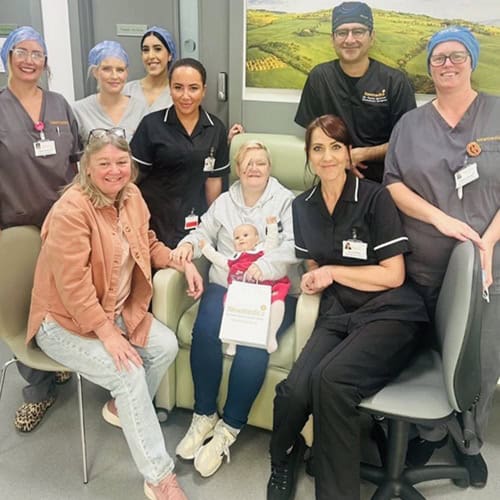
A Newmedica ophthalmologist is using Cataract Awareness Month to challenge assumptions about care for patients with learning difficulties.
Qasim Mansoor, Consultant Ophthalmologist at ophthalmology provider Newmedica Middlesbrough says that patients with learning difficulties are more likely to develop cataracts at a younger age. But are significantly less likely to be referred for treatment or offered the same surgical options as the wider population.
‘That is an inequality we should all want to address,’ he says. ‘Cataracts do not simply blur vision. They affect confidence, independence and mental wellbeing, particularly for people who already face barriers in accessing healthcare.’
Challenging assumptions about local anaesthetic surgery
Cataract surgery is routinely performed under local anaesthetic using eye drops.
‘But in reality, many patients with learning difficulties are told that surgery under local anaesthetic, simple eye drops to numb the eye, is not possible for them, and end up needing a general anaesthetic,’ Mr Mansoor explains. ‘But with the right preparation, communication and support, many can safely and comfortably undergo cataract surgery without the added risks of general anaesthesia.’
He recently demonstrated this approach while treating Claire Higgins, 55, a well‑known figure in the Middlesbrough community with learning difficulties and complex health needs, including type 1 diabetes.
Person‑centred adjustments make the difference
Claire’s care was carefully planned around her needs and preferences. Before surgery, Newmedica’s team spent time building trust, explaining each step of the process and understanding what would help her feel calm and safe.
Mr Mansoor explains: ‘Cataract surgery can feel daunting for anyone, but for someone living with learning difficulties and complex health conditions, the anxiety can be on a completely different level. From the moment Claire came to us, our whole team was focused on understanding not just her eyesight, but her as a person, her worries, her routines, and what would help her feel safe.
‘What made Claire’s care so special was the effort everyone put in before she even reached the operating theatre. Our pre-assessment team spent real time with her, building trust and explaining exactly what to expect.
‘On the day of surgery, her friend was with her, she brought a doll that gave her comfort, a team member held her hand throughout, and we played her choice of music in the background. These are small things on the surface, but they made all the difference.’
Reducing risk, improving access
General anaesthesia carries greater risks, he also notes, particularly for people with other health conditions, and means a longer recovery.
‘Claire has shown that with the right preparation and the right team around you, it simply does not have to be that way. Claire’s story is proof that excellent, personalised care can remove those barriers.’
Claire herself describes the experience positively, highlighting the short waiting times, flexibility around her diabetes management and the kindness of staff throughout her care.
‘Having additional needs can make surgery like this extra complicated and it’s not just the anxiety of undergoing the surgery while awake,’ she says. ‘Other health conditions need to be accommodated as well as the logistics of taking eye drops every day for a few weeks, and sensory overwhelm from needing to wear things like eye patches.
‘But with the support of Newmedica and my friends, I was able to overcome these hurdles and can now enjoy my eyesight.’
A wider message for patients and carers
Newmedica hopes Claire’s story encourages families, carers and referring professionals to reconsider what is possible for patients with learning difficulties.
‘We hope Claire’s experience encourages others in the community and the families and carers who support them to know that this kind of care is available,’ concludes Mr Mansoor, ‘and that having a learning difficulty should never be a reason to miss out on treatment that could genuinely change your life.’