





Exhibitions & Meetings
Parents urged to get children checked for dry eye disease
Parents urged to get children checked for dry eye disease
On OSA Stand at 100% Optical
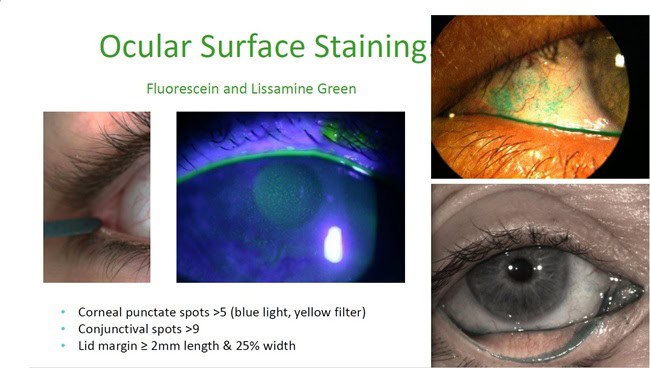
Dry Eye Disease has become a feature of teenage and young adult life, rather than a condition which traditionally troubled only the middle-aged.
The problem is largely unrecognised, says a leading figure in children’s vision and eyecare, Prof James Wolffsohn, Professor of Optometry at Aston University, Birmingham –
“With modern lifestyles, in particular extensive time spend viewing digital screens, it is not surprising that so many of us have Dry Eye Disease (DED) – and now many from a young age. Dry eye disease is associated with anxiety and depression1, and at the extreme end has been rated to be as debilitating as angina or being on kidney dialysis2.”
“It arises from a loss in the balance of the carefully formulated tear film and ocular surface. When we use digital devices in particular, our blinking is affected and this affects the expression of the tears as well as their flow over the ocular surface. It is a chronic condition which can progress through life.
“The eyelids passing over the ocular surface is the equivalent of the lid dragging along the length of a tennis court each day. An incomplete blink is part of the problem for many people staring at a fixed distance for hours.”
Urging greater scrutiny of the tear film of children and young people, Prof Wolffsohn was speaking at the annual UK event, 100% Optical where the profession and industry gather in London.
Alongside this, Prof Annegret Dahlmann-Noor, Consultant Paediatric Ophthalmologist, Moorfields Eye Hospital, is currently conducting a three-month study into this aspect of ocular health amongst 8-18 year olds at six schools in Wandsworth, south London –
“The study, involving 1,000 children, is looking at the effects of modern life, with air pollution and climate change under scrutiny. When I started in ophthalmology dry eye was rare in this age group, but this is no longer the case.”
The UCL study is being conducted by the Moorfields Biomedical Research Centre under the direction of the National Institute of Health Research and is expected to report its findings later this year.
A Royal Society Survey of around 450 children in 2019 found each hour of digital device use each day increased the odds of having dry eye by 15%, whereas each additional hour of sleep decreased the odds by 27%3.
“That survey is now six years old. This situation is likely to have become much worse,” said Prof Wolffsohn.
With thousands of research papers published on DED this multifactorial disease sees many contributing factors including environmental conditions, insufficient blinking and many hours with use of electronic devices causing a fixed stare –
“Prescribing artificial tears is often not enough. The optometry profession is well placed to examine the tear film and ocular surface to discover exactly what the cause of gritty, or watering eyes is likely to be,” he added.
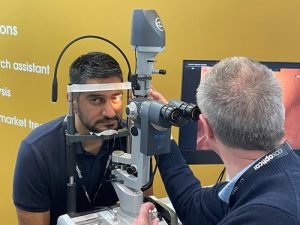 Prof Wolffsohn is calling for the same mentality of prophylactic visits to the dentist, where healthy teeth are checked once a year, to that of checking the eyes, rather than waiting for a chronic condition to develop –
“I often ask my patients – you have teeth checked for their health regularly but not eyes. You brush healthy teeth every day but what care are you taking of your eyes? What would you rather lose – a tooth or your sight?”
Prof Wolffsohn and colleagues within the optical community have now devised a short questionnaire of symptoms, which aligned to increasingly accurate tear film biomarker clinical tests, can point to the causes and appropriate treatment plan. The tear film sample can examine markers and allergens which may be driving the disease of the tear film biomarkers –
Analysis of the tear film identifies levels of
- MMP-9
- IgE, indicating allergic reactions
- LTA pointing to immune dysregulation
Also speaking at 100% Optical, Haywards Heath optometrist, Mandy Davidson, encouraged all colleagues to examine the tear film biomarkers of patients –
“We are able to provide a personalised dry eye care treatment, under the guidance of TFOS DEWS III report. The biomarkers enable objective assessment to this multifactorial disease.”
The Dry Eye Association has a patient website and is a considerable source of information and support. www.dry-eye-association.com
References
- Zhou Y, Murrough J, Yu Y, Roy N, Sayegh R, Asbell P, Maguire MG, Ying GS; DREAM Study Research Group. Association Between Depression and Severity of Dry Eye Symptoms, Signs, and Inflammatory Markers in the DREAM Study. JAMA Ophthalmol. 2022 Apr 1;140(4):392-399. doi: 10.1001/jamaophthalmol.2022.0140. PMID: 35266971; PMCID: PMC8914873.
- Cutrupi F, De Luca A, Di Zazzo A, Micera A, Coassin M, Bonini S. Real Life Impact of Dry Eye Disease. Semin Ophthalmol. 2023 Nov;38(8):690-702. doi: 10.1080/08820538.2023.2204931. Epub 2023 Apr 24. PMID: 37095685.
- Wang MTM, Craig JP, Vidal-Rohr M, Menduni F, Dhallu S, Ipek T, Acar D, Recchioni A, France A, Kingsnorth A, Speakman S, Wolffsohn JS. Impact of digital screen use and lifestyle factors on dry eye disease in the paediatric population. Ocul Surf. 2022 Apr;24:64-66. doi: 10.1016/j.jtos.2022.01.001. Epub 2022 Jan 31. PMID: 35101619.