





New products and Services
Introducing Essilor® Stellest® 2.0 Lenses
 The 100% Supplier Roundup: Essilor/Luxottica
Introducing Essilor® Stellest® 2.0 Lenses: A Major Step Forward in Myopia Management for Children
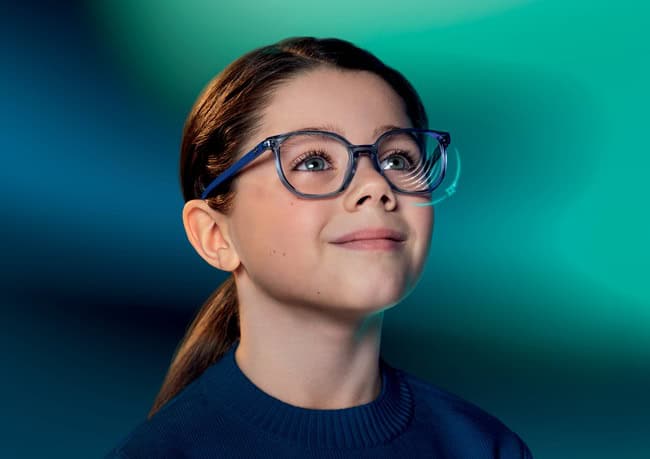
Essilor® proudly unveils the Essilor® Stellest® 2.0 lens, powered by advanced Highly Aspherical Lenslet Target (H.A.L.T.*) MAX technology.
Designed with increased lenslet power and asphericity, this next-generation lens builds on the original H.A.L.T.* technology first launched in 2020. Validated in a one-year clinical crossover study, Essilor® Stellest® 2.0 lenses have demonstrated significantly greater efficacy in slowing myopic eye growth compared to the first-generation lenses.1,2
Millions of children around the world have already benefited from the first-generation Essilor® Stellest® lenses, which have been shown to slow down myopia progression by 67% on average.†3 Essilor® Stellest® 2.0 lenses, powered by H.A.L.T.* MAX technology, provide twice the signal,‡ slowing myopic eye growth even further compared to the first-generation lens.§ 1,2
Figure 1: Essilor® Stellest® 2.0 lenses, powered by H.A.L.T.* MAX technology, provide twice the depth of volume of non-focused light (by design) compared to that of Essilor® Stellest® lenses with H.A.L.T.* technology
Charlotte Timbury, Director of Medical & Professional Affairs for EssilorLuxottica North Europe, said: “As long as childhood myopia continues, Essilor® will never stop searching for new ways to manage it, and this innovation is our most efficacious solution for myopia management yet.”
Wearers will continue to enjoy the same trusted benefits of Essilor® Stellest® lenses – clear, corrected vision without compromising aesthetics and safety¶ – but with added power, # and efficacy§1,2 making it an ideal choice for children with early onset myopia.
TECHNOLOGICAL ADVANCES
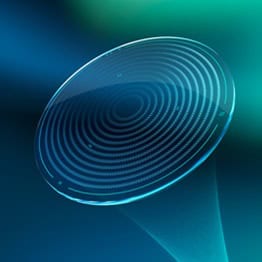
Essilor’s continued research in myopia has led to this new advancement. R&D experts identified a dose-dependent relationship between the characteristics of the lenslets and myopia progression control efficacy, enabling them to hypothesise an optimal “dosage” of lenslet power and asphericity, which was then incorporated into the new lens design.
Charlotte Timbury, said: “The lenslets work on two key principles: increasing the mean power and increasing the asphericity of the lenslets. Together, these changes provide twice the depth of volume of non-focused light positioned further from the retina, compared to the previous generation lens.‡ This results in a stronger optical signal that can help slow axial elongation.”
The lenslets in Essilor® Stellest® 2.0 lenses are spread over 12 rings on the lens, as opposed to 11 in the previous generation, and the lens is also available up to a wider 75mm diameter, allowing for a broader frame choice.
CLINICAL TRIAL
To assess the efficacy of Essilor® Stellest® 2.0 lenses, a contralateral crossover clinical trial was conducted in Singapore with 50 children.
The results showed that Essilor® Stellest® 2.0 lenses, powered by H.A.L.T.* MAX technology, significantly slowed axial elongation compared to Essilor® Stellest® lenses with H.A.L.T.* technology at month 6 and 12.1,2 In fact, with Essilor® Stellest® 2.0 lenses, eye growth in myopic children was 1.88 times slower than with Essilor® Stellest® lenses. §1
Additionally, results indicated that younger children (aged ≤8.5 years) may particularly benefit in terms of slowing axial elongation.1
Figure 2: Illustration of the results from the contralateral crossover clinical trial
Essilor® Stellest® 2.0 lenses, powered by H.A.L.T.* MAX technology, significantly slowed axial elongation compared to Essilor® Stellest® lenses with H.A.L.T.* technology at month 6 and 12.
**P<0.001 using paired t-test; Unadjusted mean AL change; Error bars represent SEM
††For comparison, the grey zone represents axial elongation observed in age matched children wearing single vision lenses.4,5
ASK THE EXPERT
Charlotte Timbury, Director of Medical & Professional Affairs for EssilorLuxottica North Europe, answers some questions on the new lens and how it can benefit wearers:
How can optical professionals explain the benefits of myopia management to parents and patients in a way that encourages adoption?
It’s important to begin by explaining that myopia is becoming increasingly common among younger generations across the world.6,7 Wearing a myopia progression control spectacle lenses, such as Essilor® Stellest® 2.0 lenses, can both correct myopia and help slow down its progression.
Help parents understand that single vision lenses primarily correct vision but do not actively slow myopia progression. Emphasise that slowing progression is important for their child’s long-term eye health, as myopia can progress rapidly in some children and may increase the risk of developing high myopia.8,9 Encourage early intervention by explaining that starting myopia management as soon as myopia is detected can maximise the chance of reducing progression and protecting the child’s vision in the long term.
How can optical professionals simplify how H.A.L.T.* MAX technology works to a patient?
Essilor® Stellest® lenses are specially designed lenses that can help slow down the worsening of short-sightedness (myopia) in children. The spectacle lens has tiny, invisible contiguous lenslets arranged in rings on the lens. These lenslets gently change the way light enters the eye, helping to slow down the eye’s growth – which is what causes myopia to get worse over time.
The new version, Essilor® Stellest® 2.0 lens with H.A.L.T. * MAX technology, takes this a step further. It uses a more advanced optical design that sends a stronger signal to the eye to slow down elongation: the lenslets have an increased power and increased asphericity. The effect is even greater than with the first generation of Essilor® Stellest®, which means it may help slow your child’s myopia progression even more over time.
When should Essilor® Stellest® 2.0 lenses be recommended, over Essilor® Stellest® lenses?
There is an ongoing need for enhanced myopia management solutions, particularly for younger children, fast progressors, and those with higher levels of myopia at onset. In such cases, early and proactive use of the most effective available option is encouraged. Essilor® Stellest® 2.0 lenses build on the clinically proven performance of the original Essilor® Stellest® lens, which remains available, and represent Essilor®’s most efficacious solution to date for slowing myopic eye growth. They were evaluated in younger children (ages 6–10),1,2 highlighting their suitability for early intervention. Based on the prescribing eye care professional’s decision, Essilor® Stellest® 2.0 lenses may be recommended to a child that presents with initial signs of progressive myopia and up until their myopia stabilises.
A Step Forward in the Fight Against Myopia
More than a product introduction, the launch of Essilor® Stellest® 2.0 lenses celebrates EssilorLuxottica’s 45-year legacy of science-led innovation in myopia management in 2025.
At Essilor® Stellest® our mission is clear: we stand for children around the world to not be limited by their vision but inspired by what they can achieve and we will continue to search for new ways to tackle this global myopia epidemic through pioneering innovation and evidence- based research.
FOOTNOTES
Essilor® Stellest® lenses are not currently FDA approved and are not commercially available for sale in all countries, including the U.S.
*H.A.L.T., Highly Aspherical Lenslet Target
† Compared to single vision lenses, when worn 12 hours per day every day for two consecutive years.
‡ Essilor® Stellest® lenses create a volume of non-focused light in front of the retina, which generates the stimulus that slows eye elongation in myopia. This stimulus is twice as strong in Essilor® Stellest® 2.0 lenses compared to Essilor® Stellest® lenses. This does not imply the corresponding doubling of efficacy for slowing myopia progression.
-
Based on 12-month results from a prospective, randomised, double-masked contralateral crossover clinical trial conducted in Singapore on 50 children, in which one eye was equipped with an Essilor® Stellest® lens and the other with Essilor® Stellest® 2.0 lens.
¶ Essilor® Stellest® 2.0 lenses are made from AIRWEAR® polycarbonate which provides impact-resistance and blocks 100% transmission of UV.
\# Twice the power refers to two (or more) times the depth of volume of non-focused light (by design) compared to that of Essilor® Stellest® lenses and is not associated with twice the lens or lenslet power. Additionally, this does not imply a corresponding doubling of efficacy in slowing myopia progression.
†† The SVL (grey zone) is based on Singaporean data from the SCORM2 study and a 2025 clinical trial5 extrapolated for children aged 6 to 10 years.
1Raveendran RN, et al. Effect of increased power and asphericity of highly aspherical lenslets on myopia control efficacy: a contralateral crossover study. Transl Vis Sci Technol. 2025;14(11):9
-
EssilorLuxottica data on file (2025). Effect of increased power and asphericity of lenslets on myopia control efficacy: 12-month results of a contralateral crossover clinical trial.
-
Bao J, et al. Spectacle lenses with aspherical lenslets for myopia control vs single-vision spectacle lenses: a randomised clinical trial. JAMA ophthalmology. 2022;140(5):472-8. doi:10.1001/jamaophthalmol.2022.0401
4.Rozema J, et al. Axial growth and lens power loss at myopia onset in Singaporean children. Investigative ophthalmology & visual science. 2019;60(8):3091-
-
Wong YL, et al. Myopia Control Efficacy of Spectacle Lenses with Dual-Index Aspherical Lenslets: A 1-Year Randomised Clinical Trial. Ophthalmology Science. 2025;5(4):100766.
-
Chen Z, et al. Significant myopic shift over time: Sixteen-year trends in overall refraction and age of myopia onset among Chinese children, with a focus on ages 4-6 years. Journal of Global Health. 2023;13.
-
McCullough SJ, et al. Six Year Refractive Change among White Children and Young Adults: Evidence for Significant Increase in Myopia among White UK Children. PLoS One. 2016;11:e0146332
-
Wolffsohn JS, et al. IMI–myopia control reports overview and introduction. Investigative ophthalmology & visual science. 2019;60(3):M1-9.
-
Sankaridurg P. A less myopic future: what are the prospects? Clin Exp Optom. 2015;98(6):494-6
-
Euromonitor, Eyewear 2025 edition; Essilor® International company; worldwide retail value sales at RSP
-
Based on an average recommendation with quantitative research conducted in 8 countries (Brazil, Canada, China, France, India, Italy, UK, and the US) among a representative sample of 1560 Eye Care Professionals: 1047 opticians, 513 optometrists between January and June 2022. These 8 countries represent: 63% of total world in lens volume
© Essilor International – September 2025. Essilor®, Evolving Vision™ and Stellest® are trademarks of Essilor International.