






audiology
The Impact of Anxiety and Stress on Vision and Hearing
Mental Health and Sensory Wellness: The Impact of Anxiety and Stress on Vision and Hearing
Many people can expect anxiety to cause rapid heart rate and to keep them up at night. But people can experience strange things like blurry vision throughout a stressful week or a ringing in the ears throughout a stressful month that gets louder as the worries stack up or sharp sounds that become intolerable. These symptoms are actually very real, and mental health can affect the sensory system. In times of mental strain, the eyes and ears can take the first hit.
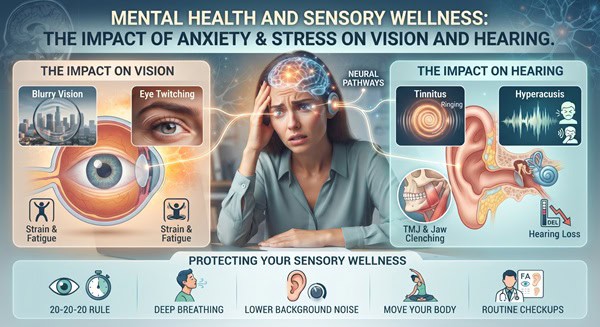
The article explains what effects anxiety and stress can have on a person’s hearing and vision, what signs a person should be looking out for and how to protect sensory wellness.
How Stress Affects the Body
When someone or something makes you feel threatened or overwhelmed, your body prepares you to either fight the situation or run away from it. To do either, your body has to send a lot of stress hormones to your body and make your heart work faster and your muscles get ready. When stress is constant, your body never gets a signal to relax and, in the long run, this can really affect your body.
People with anxiety disorders are fairly common, and the National Institute of Mental Health states that anxiety disorders can cause both emotional and physical symptoms. Changes to the nervous system can also affect the eyes and ears.
The Impact of Anxiety and Stress on Hearing
Your hearing can also be affected by stress. Here are a few of the more common issues:
Misperceptions. Some people describe stress as making sounds that feel distorted, interrupted, or overloaded.
Tinnitus. Stress does not cause tinnitus, but it may make existing tinnitus more noticeable.
Hyperacusis. Stress may bring on high levels of sensitivity to particular sounds, or make existing hyperacusis worse.
Hearing loss. Stress and anxiety can lead to a decline in the neurochemicals required for hearing, and an increase in stress hormones which can weaken the ear’s delicate structures and contribute to hearing loss.
Of course, some stress is a good thing. For example, the stress of an impending exam can help people study and improve their grades. Long-term stress, on the other hand, can contribute to numerous serious health problems, including hearing issues.
Tinnitus. Sometimes stress does not cause tinnitus, but can make symptoms worse. It is a cyclical condition: the noise causes anxiety, and anxiety increases the volume of the noise. For a basic description of the condition see Wikipedia’s tinnitus page.
Sound sensitivity (hyperacusis) and anxiety. Often those with anxiety describe feeling “on edge” about surrounding noise. There are things that can exacerbate the condition. Often people who are stressed or anxious clench their jaws and grind their teeth. Muscles surrounding the ears can become inflamed and painful which makes hearing dull.
Dizziness, balance issues and anxiety. The inner ear controls balance, so if you’re feeling anxious, dizziness can definitely be caused or made worse. It becomes a vicious cycle.
There are many ways to combat your symptoms using your senses. You can practice the 20-20-20 rule. Every 20 minutes look at something at least 20 feet away for 20 seconds. You can also try taking deep breaths, since there is a correlation between deep breathing and decreased stress levels.
BLINK on Purpose. It sounds silly, but it’s scientifically proven to keep your eyes moist while you’re on your devices.
Lower background noise. Tinnitus is not always audible. You may not have to completely block it out, but reduce its volume.
Practice slower breathing. Breathing out longer than you breathe in activates the calming response.
Move your body. Walking, stretching, or yoga relaxes and restores the body.
Limit Caffeine. It strongly affects anxiety, eye twitching, and tinnitus.
Get Routine Checkups. Constant, unlikely disturbances in your vision and hearing make you anxious. It’s a good way to bring yourself peace of mind.
You may need Help if… Symptoms come and go. Especially if your senses are making you anxious and affecting your normal, daily life. Go see a doctor first to rule out anything physical. Most of the time it will give you peace of mind. If the anxiety affects you the most, it’s time to see a mental health professional and consider therapy and other lifestyle changes.
Conclusion
Your emotions and your senses are interconnected. Stress and anxiety can make your eyes and your ears feel even more strained. It can make the world feel even louder, and even more overwhelming, and can even make ringing in your ears even worse. Recognizing the link between your anxiety and stress and your other symptoms is the first step to feeling better, and it helps people to understand that these symptoms are not ‘all in your head.’ In reality, the symptoms are very real, and very treatable.
Take charge of your symptoms. Get your eyes and your hearing tested. Also, try starting a new, small habit this week that helps to relieve stress. If you find that anxiety is still getting in the way, don’t be afraid to get outside help. It may help to start with a virtual psychiatrist since the barrier of traveling to and from appointments has been removed. Your mind and your senses deserve to be taken care of.