





New products and Services
VARILUX IMMERSIA: the new occupational lens from Essilor
 VARILUX IMMERSIA: the new occupational lens to stay comfortably immersed in your immediate surroundings
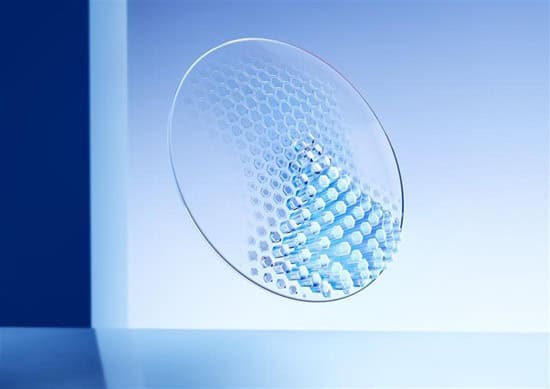
Essilor® introduces Varilux® Immersia™, a new occupational lens developed to keep presbyopes comfortably immersed in their immediate surroundings1.
Near vision and multitasking between devices can put significant strain on the eyes. With up to 72% of time spent on near and intermediate vision tasks2 – mostly involving screens – this can lead to difficulty focussing, poor posture, and eye strain if not addressed.
Varilux® Immersia™ offers expanded near vision in close-up and digital activities3 to help maintain natural head posture and alleviate digital eye strain4 for wearers. Available in two options – Varilux® Immersia mid™ for vision up to 1.5 metres and Varilux® Immersia room™ for vision up to 3 metres.
The lens has been developed by Essilor® to support prolonged close focus and uses in-depth analysis of screen positions, while considering a wearer’s natural posture and ergonomic needs. Tested in a simulated environment using AI-powered digital twining technology, this enables a wide range of R&D simulations to assess and guarantee lens performance.
Fredrik Jönsson, VP Wholesale North Europe at EssilorLuxottica, said: “Extensive digital use can often lead to discomfort for our eyes with research showing that 80% of people aged 40-65 suffer from visual fatigue at the end of a typical day4 and 71% need to make an effort to maintain sharpness5.
“From intricate craftmanship to digital precision, Varilux® Immersia™ supports prolonged close focus by delivering comfortable and precise vision so patients can stay immersed in comfort, whether at work or at home.”
LENS DESIGN
Varilux® Immersia™ has been designed with the true environment of the patient in mind and benefits both the field and depth of vision.
Developed using in-depth analysis of screen positions and validated by AI digital twinning technology6, the ergonomic design is defined by three points of reference to provide a +35% to 76% wider area of sharp vision in near vision, compared to a standard varifocal lens7.
Optimising occupational lenses for Smartphone, Working and Conversational Distances
Smartphone distance
By placing the near vision zone higher in the lens, Varilux® Immersia™ provides easier access to near vision, which enables natural head posture in front of screens8. This results in a +38% to 54% expanded range of head postures with good visual acuity, compared to a standard varifocal lens8.
Working distance
Varilux® Immersia™ is ergonomically designed for computer life9. When looking straight ahead, the patient can view their desktop screen or work area with minimal adjustment of the head and eyes. With a standard varifocal lens, patients elevate their head by -8°. With Varilux® Immersia™ the head tilt is much closer to the ergonomic recommendation of 0°: -1° or -2°, according to product version 9.
Conversational distance
To meet different near vision needs, the lens is available in two versions.
Varilux® Immersia mid™ for vision up to 1.5 metres – the average maximum distance of an object on a desk and of a face-to-face conversation in close proximity – to support easy switching between devices 3. And Varilux® Immersia room™ for vision up to 3 metres – the average conversational distance in a business or casual setting – to support multitasking in near and intermediate ranges 3.
The occupational lens also leverages W.A.V.E 2.0™ lens technology, a pupil size model which helps control high-order aberrations meaning quality of vision is less impacted in various lighting conditions10.
ASK THE EXPERT
Q&A with Dimple Zala, Global Medical Advisor at EssilorLuxottica
Why should an occupational lens be recommended?
Presbyopia, a condition that impairs near vision and reduces the eye’s ability to focus on nearby objects, typically becomes noticeable in the early to mid-40s.
If presbyopia is not corrected, patients often experience eye strain and visual discomfort, which can affect their quality of life.
Presbyopes don’t just want to see clearly, but to see comfortably, and occupational lenses are ideal for prolonged near-vision tasks during both work and leisure time.
In the same way that people switch footwear between everyday walking and hiking, patients can benefit from switching between varifocal and occupational lenses too. Varifocals are the solution for all-day, on-the-go use, but for prolonged optimised multitasking at close range occupational lenses are the optimal solution.
Varilux® Immersia™ lenses offer a comprehensive near-range solution. They go beyond the limitations of near single vision options by providing multiple distances at near and intermediate ranges.
What types of patients benefit most from these lenses?
The lens is particularly suitable for patients who already wear near single-vision solutions or varifocal lenses.
Varilux® Immersia.mid™ offers vision up to 1.5 metres so we’d recommend this is best suited for an ametropic presbyope, in addition to their main Varilux® varifocal lenses.
Varilux® Immersia.room™ offers vision up to 3 metres, so this option would be perfect to suggest for emmetropic presbyopes, who may not want to wear varifocal lenses all the time. The lens is also suitable for early emmetropic presbyopes who are just beginning their journey into presbyopia.
How does it differ from previous occupational lenses?
Our previous occupational lenses focused on objects positioned in a straight line in front of the patient, using a 2D approach. But near vision involves multiple targets and distances, encompassing the entire immediate surroundings, not just what’s directly in front of the wearer.
Varilux® Immersia™ design was optimised for a multitasking in near and intermediate ranges3 extending the available depth of vision compared to Varilux® Digitime® and improving the posture of the wearer. The smooth degression in combination with the expanded volume of vision at near allows an easy switch between different devices3.